

Zinc die casting is a widely used manufacturing process known for producing complex shapes with high precision and excellent surface finishes. However, it presents its share of challenges.
Casting defects, particularly in die casting, can lead to significant issues affecting both the quality and functionality of the final product. This article delves into the common die casting defects encountered in zinc die casting, their causes, effects, and how they can be mitigated to ensure optimal product performance.
Table of Contents
- Introduction to Zinc Die Casting Defects
- Defects on Final Products
- Common Defects in Zinc Die Casting
- Optimizing the process through simulation tools
- Conclusion
Introduction to Zinc Die Casting Defects

Die casting is a manufacturing process that involves forcing molten metal under high pressure into a mold cavity. While zinc die casting offers numerous advantages, such as high production rates and the ability to create complex geometries, surface defects in casting can compromise the integrity and appearance of the final product.
Understanding the root causes of these die casting shortcomings is essential for engineers and foundry managers aiming to improve product quality and reduce production costs.
Defects on Final Products

Defects in zinc die casting can have far-reaching consequences:
- Mechanical Failure: Porosity and shrinkage can lead to weakened structural integrity.
- Aesthetic Issues: Surface defects detract from the appearance, critical in consumer products.
- Functional Impairment: Dimensional inaccuracies can affect the assembly and performance.
- Increased Costs: Higher rejection rates and rework increase production costs.
Common Defects in Zinc Die Casting
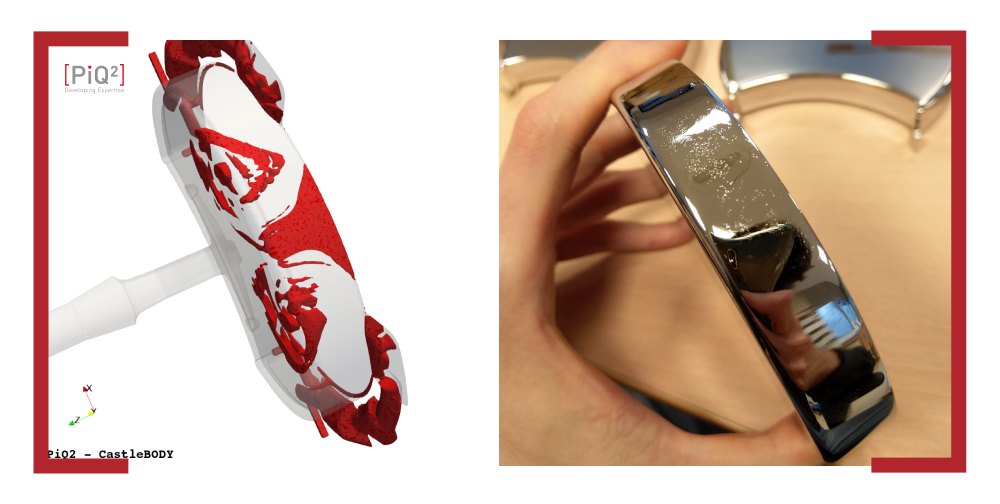
Below are some of the most prevalent defects encountered in zinc die casting, along with their causes, effects, and solutions.
Air and gas porosity
Gas porosity refers to the presence of small voids or cavities within the cast metal. It is often caused by air or gas entrapment during the casting process.
- Causes:
- Inadequate venting in the die casting mold.
- Wrong injection speed leading to turbulence.
- Wrong feeding runners and gating design
- Effects:
- Reduced mechanical strength.
- Potential for leakage in pressure-tight applications.
To mitigate porosity and air entrapment, it’s crucial to optimize the die casting process parameters as well as the mold design.
Adjusting the injection speed profile to reduce turbulence can help minimize air being trapped in the molten metal. Enhancing the die design to improve venting allows gases to escape more effectively during the filling process. Reviewing the runners design to ensure a smooth and less turbulent flow reduces air entrapment.
Employing simulation tools like Castle enables engineers to predict and address potential porosity issues before actual production, thus improving the quality of the casting and reducing defects.
Surface Blisters
When air porosity is located just below the skin, blistering manifests as raised areas on the surface of the casting, similar to bubbles.
- Causes:
- Entrapment of gases just beneath the surface
- Air entrapment during filling
- Excessive detaching agent application.
- Too high die surface temperature
- Effects:
- Compromised surface integrity.
- Increased rejection rates due to poor appearance.
Addressing blistering involves controlling the factors that lead to gas entrapment beneath the surface. Reducing the use of lubricants or switching to ones that produce fewer gases at high temperatures can minimize gas generation. Additionally, maintaining optimal mold temperatures prevents hot spots that can enhance blisters formation.
Castle can help in optimizing these parameters by modeling air outflow during filling and the thermal behavior during solidification.
Shrinkage porosities and Surface sinks
- Shrinkage porosities are cavities generated by the contraction of zinc during the solidification, while Zinc sinks are depressions on the casting surface caused by shrinkage cavities that happen just below the skin
- Causes:
- Uneven cooling rates due to inconsistent mold temperatures.
- Insufficient feeding of molten metal to compensate for shrinkage.
- Complex geometries with not uniform thickness distribution.
- Effects:
- Structural weaknesses in the casting.
- Surface defects that impact on the aesthetics
To avoid shrinkage porosities and sinks, it is important to achieve uniform cooling and solidification throughout the casting.
This can be accomplished by optimizing mold and part design to ensure consistent temperature distribution and by adjusting the gating and feeding systems to provide adequate molten metal flow to compensate for shrinkage. Utilizing thermal analysis through simulation software helps identify unwanted hotspots and allows for modifications in the process or design to prevent uneven solidification and shrinkage cavities.
Erosion and soldering
Erosion involves the damage of the mold surface, while soldering involves adherence of molten zinc to the mold surface, leading to defects.
- Causes:
- Chemical and physical reactions between the molten zinc and mold material.
- High mold temperatures exacerbating soldering.
- High alloy speeds inside the cavity increasing erosion.
- Effects:
- Mold damage reducing its lifespan.
- Surface defects on castings requiring rework.
Preventing erosion involves reducing chemical reactions between the molten zinc and the mold material. Adjusting casting temperatures and alloy speed to optimal levels reduces the tendency for erosion to occur.
Additionally, a proper thermal management of the mold, along with correct gating design can prolong mold life and improve casting surface quality.
Simulation software can model the interaction between molten metal and mold surfaces both during filling and solidification, helping to develop strategies to reduce erosion defects.
Optimizing the process through simulation tools
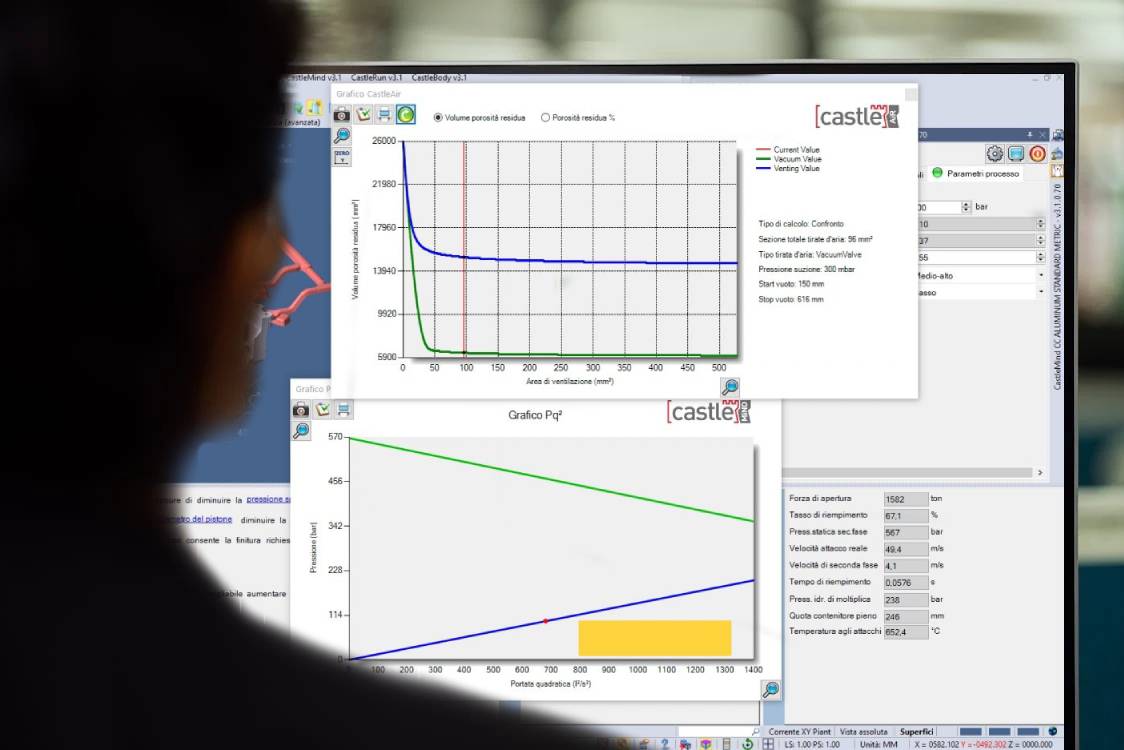
Addressing these casting defects requires a comprehensive understanding of the die casting process. Simulation tools like Castle by PiQ2 offer advanced capabilities to predict and mitigate defects before production.
- Process Optimization: Simulate different parameters to find the optimal settings.
- Mold design: Optimize the design since the beginning of mold development.
- Defect Prediction: Identify potential areas of porosity or shrinkage.
- Cost Reduction: Minimize trial-and-error in physical production runs.
Utilizing such software enables engineers and foundry managers to enhance product quality while reducing die casting shortcomings.
Conclusion
Understanding the causes and effects of common die casting defects in zinc casting is crucial for producing high-quality components.
By addressing issues like porosity, blistering, shrinkage porosity a, and erosion, manufacturers can improve both the performance and appearance of their products.
Implementing Castle provides a proactive approach to defect prevention, ensuring efficiency and excellence in zinc die casting operations.